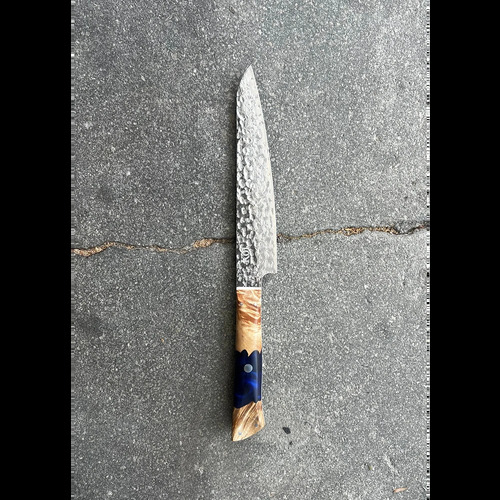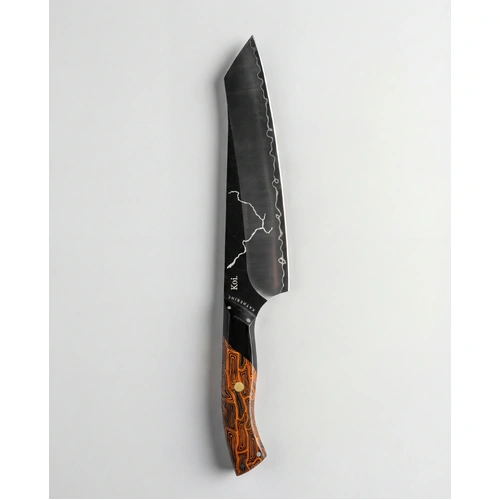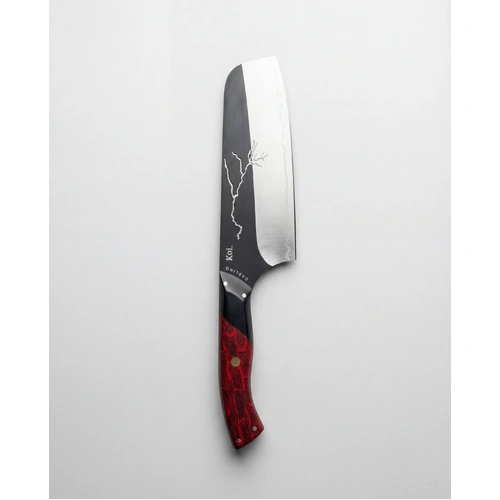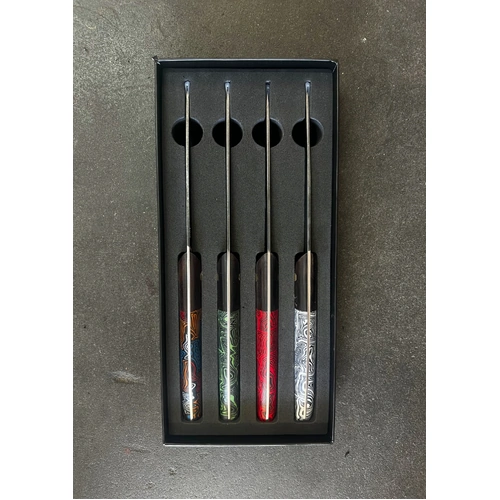
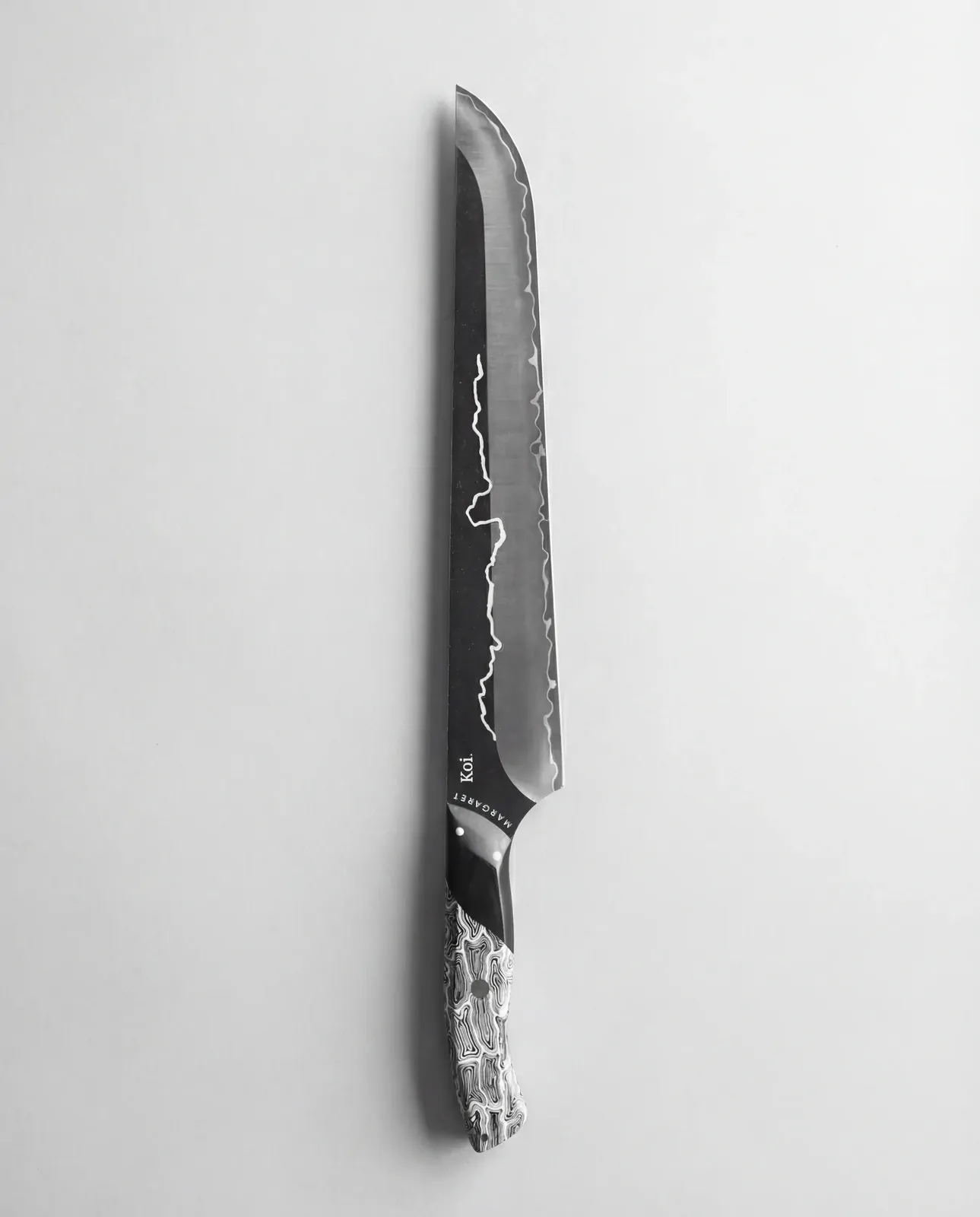
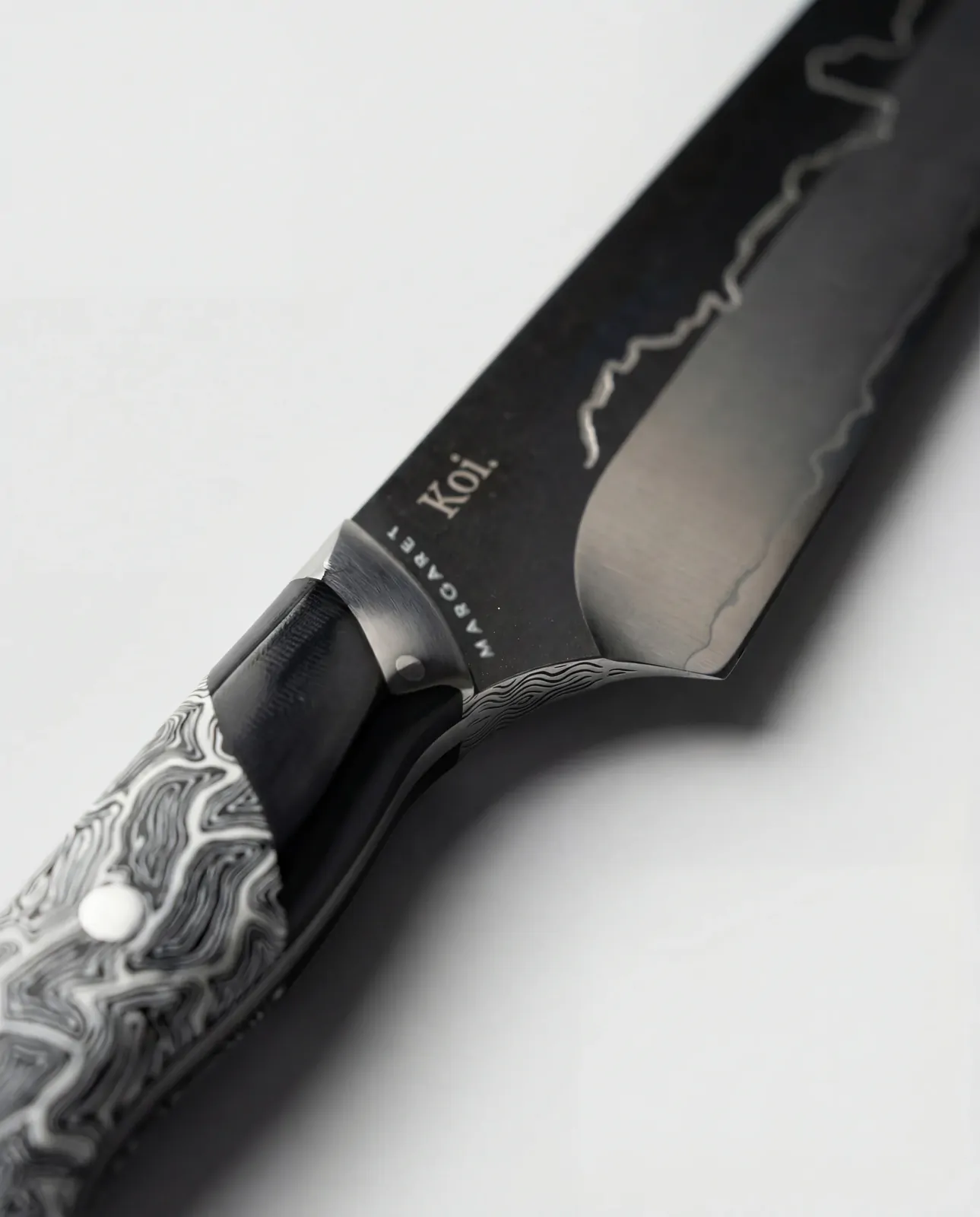
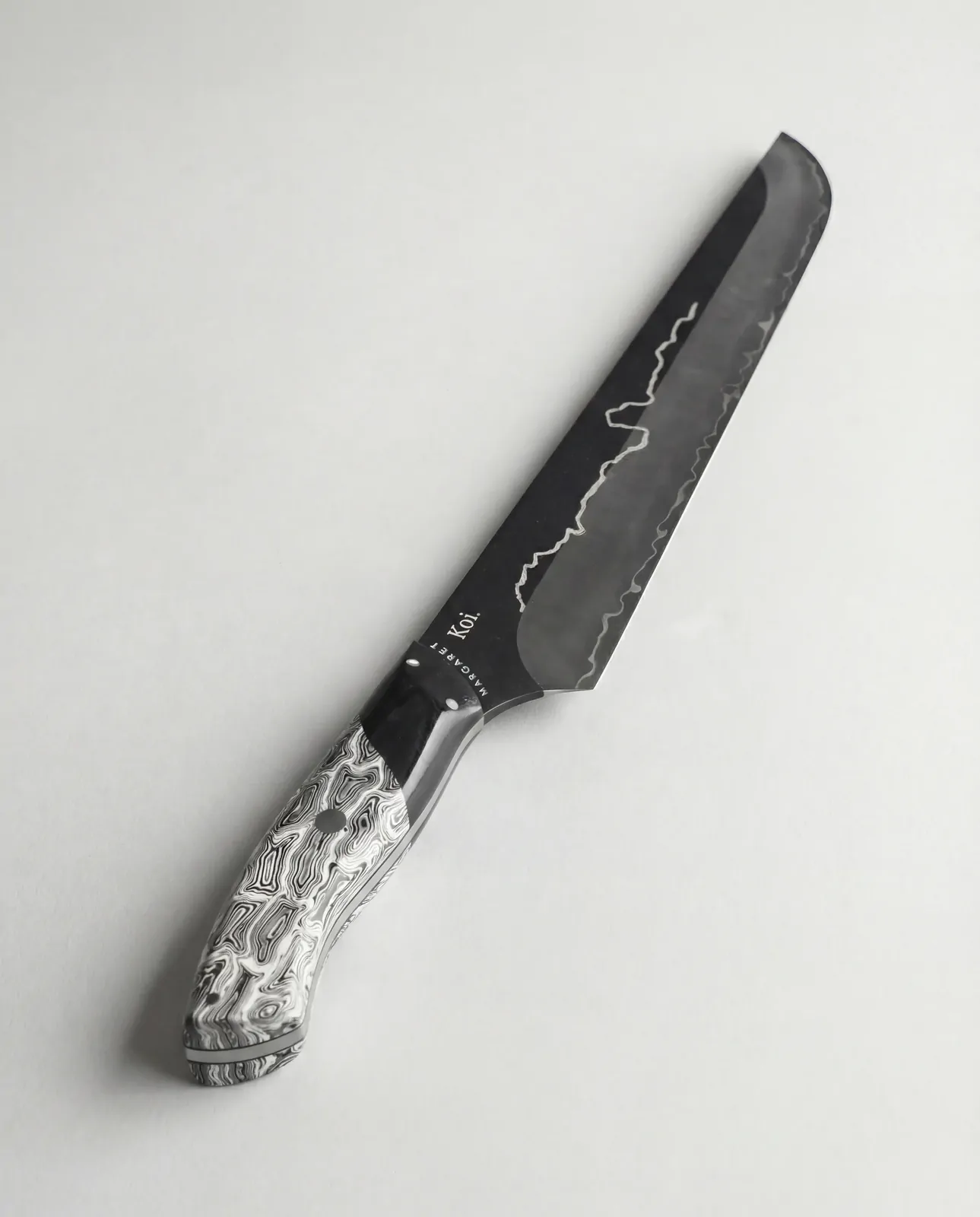
The Margaret River Knife | Slicer Knife
$365
Pay now or Pay in 4 
Out of Stock
Buy Knives Online in Australia | Premium Chef, Kitchen Knives, Butchers & Outdoor | Australia’s Trusted Knife Shop
Specifications
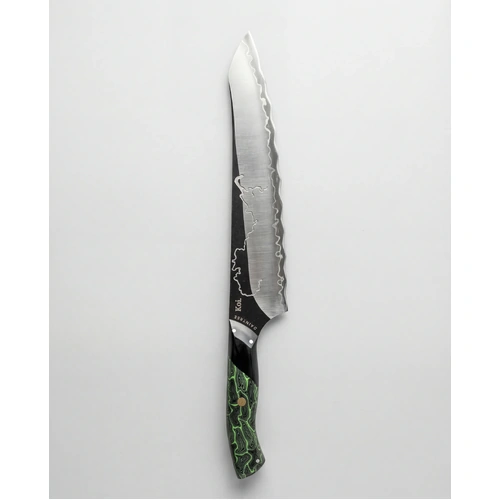
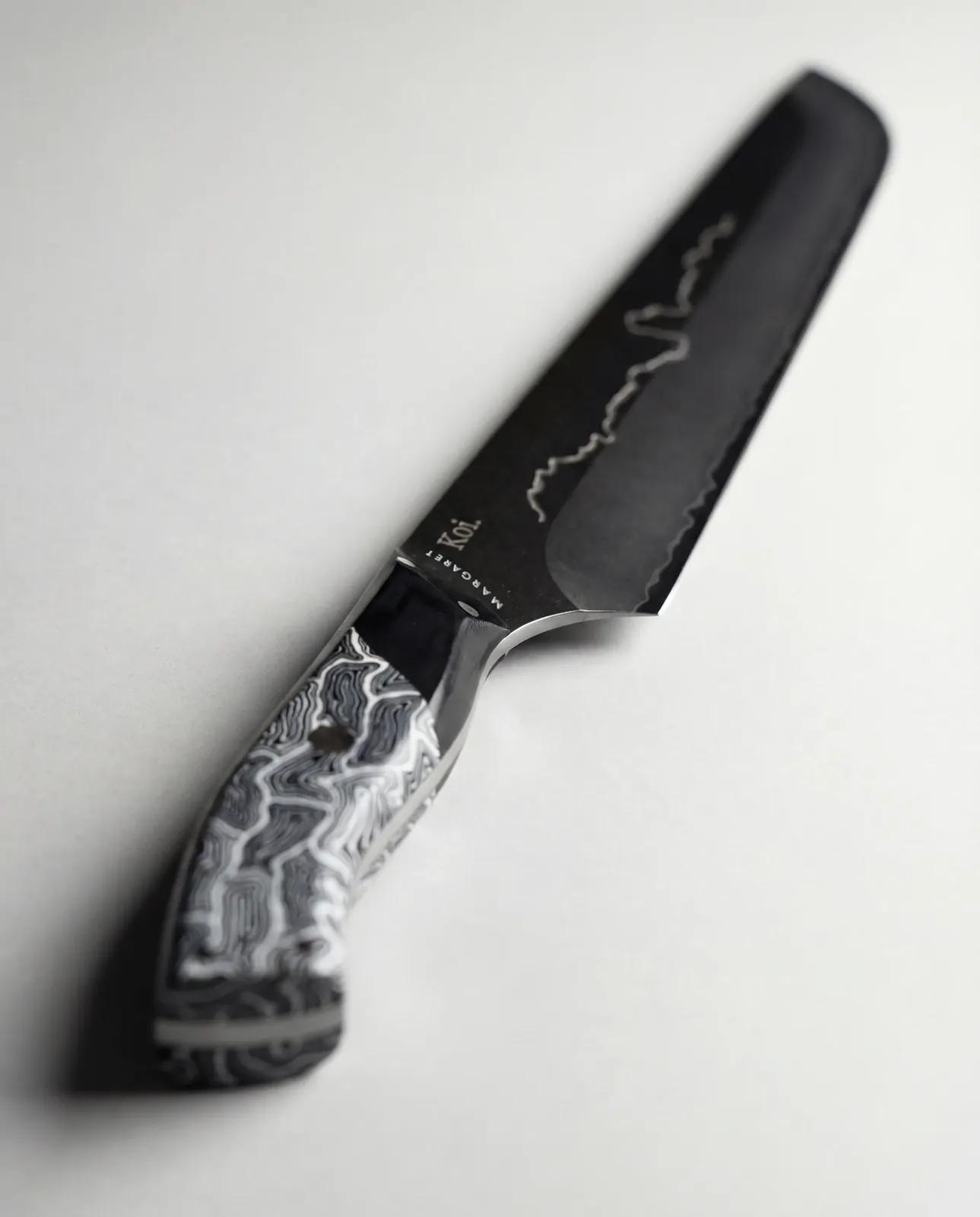
VG10 Steel Blade - VG10 is a Japanese steel specifically made for high end kitchen knives. The high carbon and vanadium content allows VG10 to be heat-treated to a high hardness (60-62 HRC), enabling it to achieve and hold a very sharp edge. The addtion of 15% chromium content makes it highly resistant to rust, staining, and corrosion. The steel is tough yet relatively easy to sharpen to maintain a sharp edge.
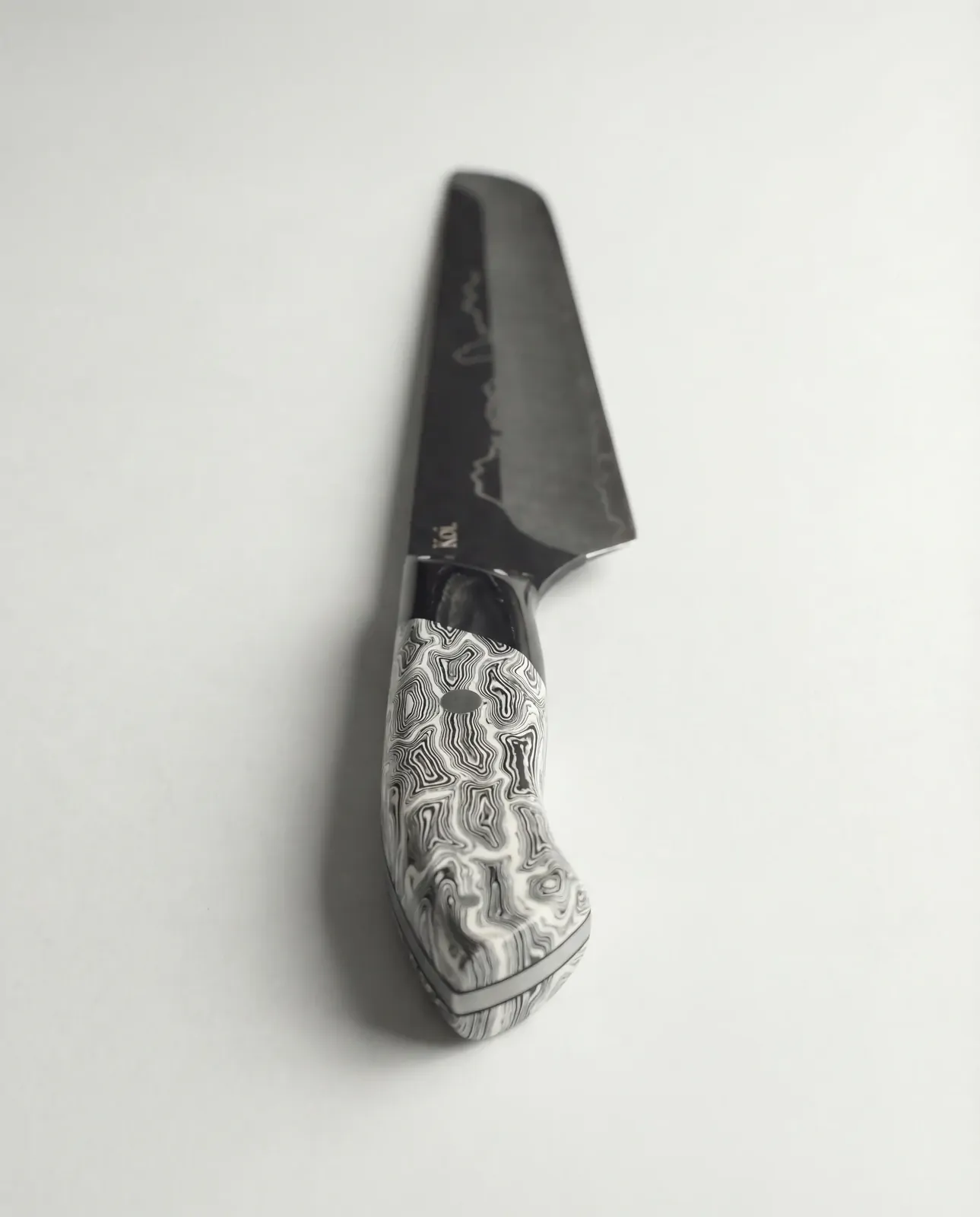
Garolite Handle - In constructing the handle we wanted to bring colours and patterns that reminded us of outback Australia - and we wanted to team that with an unrivalled strength. After testing multiple ingredients we opted to use multilayer Garolite - a military grade substance that is highly durable, impact-resistant, and nearly impervious to heat, cold, and moisture. It is also easy to grip and won't degrade over time.
The Margaret River is a renowned river located in the southwestern corner of Western Australia. It flows through the Margaret River wine region, which is famous worldwide for its high-quality vineyards and wineries.
Key Features of the Margaret River:
Ecological and Cultural Significance:
Environmental Challenges:
This knife is built to last with minimal maintenance.
But you still need to look after the knife.
It’s important to properly care for and maintain the knife blades. Extended exposure to moisture can potentially cause corrosion in even the most resilient steels over time. It’s essential to dry blades thoroughly after cleaning and avoid prolonged contact with water whenever possible.
The high-carbon steel core of the our knives also requires special care. Carbon steel is more prone to rust if moisture is not fully removed. Be sure to wipe away any moisture on the blade.
When hand washing is necessary, use warm water and avoid soaking the knives for extended periods. While hot water alone won’t typically damage the blade, sudden temperature changes can cause cracking at the microscopic level. Extreme hot or cold should be avoided.
By keeping blades clean and dry, and limiting exposure to moisture, your knife can maintain their corrosion resistance and withstand daily use for many years of dependable performance.
Please.
Do not put your knife in the dishwasher.
Here are a few key reasons why we don't recommend putting your new knife in the dishwasher:
Heat - The high heat of a dishwasher drying cycle can cause microscopic damage and weakening of the blade over time. High carbon steels like VG10 are more vulnerable to heat-related damage.
Moisture - Prolonged exposure to moisture in the dishwasher isn't fully controlled and can lead to rust or corrosion developing on the blade more easily than hand-washing. Wood and water also do not like each other over time.
Detergents - The harsh detergents and cleaning chemicals used in dishwashers aren't designed with knife blades in mind and could potentially cause unwanted reactions or deterioration of protective blade coatings.
Movement - The agitation and bouncing around of knives in a dishwasher creates risk of nicks or dulling of the cutting edge from contact with other dishes.
Aesthetics - Over time, dishwashers may cause discoloration or other undesirable visual changes to the blade appearance or handle.
Hand-washing allows for more gentle, careful cleaning without extended heat or chemical exposure - helping to maintain the VG10 steels' sharpness and corrosion resistance for longer. Taking the extra minute for hand washing is best for your quality knife.
There are a few key reasons why pull-through/electric knife sharpeners are not recommended for high-carbon steel chef's knives:
They can remove too much metal. High-carbon steels are harder and more brittle than softer stainless steels. Aggressive sharpeners can easily remove too much steel, thinning and damaging the blade edge over time.
They can create a rounded/rolled edge. Pull-through sharpeners can push the edge inward, rounding it rather than honing a sharp, angular apex. This diminishes cutting performance.
Improper angle. It's hard to set the proper angle consistently for each knife with an electric sharpener. An improperly aligned edge won't hold its sharpness as well. We sharpen the nearly all our knives at 15°
Risk of overheating. The friction from an electric sharpener, especially on hard carbon steels, carries a risk of overheating and potentially ruining the blade's temper or microstructure.
Better options exist. Whetstone sharpening allows for precise angles, control over steel removal, and developing a fine, polished edge that stays sharper longer than a pull-through can provide.
For high-performance knife blades like high-carbon, it's best to use more precise and gentle sharpening methods that don't deform or damage the metallurgy of the knife edge.
Whetstones are our preferred method of sharpening.
There are a few key reasons we recommend only using a ceramic honing rod on Koi Knives:
Hardness. VG10 steel is extremely hard, around 61-62 on the Rockwell scale. A softer steel or diamond honing rod could potentially scratch or damage the blade edge during use. Ceramic is harder than the knife steel.
Edge alignment. Ceramic honing rods gently realign the edge of the knife without removing any material. This helps maintain the factory angle and honed cutting geometry over time. Other methods may change the angle.
No burrs. As a harder material, ceramic won't roll or form burrs on the knife edge like other honing steels can. Burrs lead to diminished cutting performance.
Smooth surface. Ceramic rods offer an exceptionally smooth sliding surface, which reduces friction and potential for burning/overheating the edge during honing strokes.
Longevity. Hardest of all honing materials, ceramic will also last essentially the lifetime of the knife without wearing down from use like softer steels can.
For high-performance supersteels like VG10 that we're using in our knives, only ceramic honing maintains the pristine edge geometry without risk of micro-damage, burrs or changing the factory-set angle over numerous sharpening cycles.
It's important to keep in mind that wood, like many natural materials, is vulnerable to the effects of excess water exposure. When wooden handles get wet, they tend to expand slightly and then contract again as they dry. Repeated cycles of expansion and contraction can cause microscopic cracks to form in the grain of the wood.
For this reason, we recommend carefully hand washing your handles to minimise water contact as much as possible. A damp cloth is preferable to soaking or submerging. Thoroughly drying the handles afterwards also makes sure no residual moisture gets trapped.
With proper care, the wooden handle of your knife will maintain its attractiveness for years of use.
But exposing them to continuous wet environments or submerging them could expedite crack development.
By avoiding prolonged water submersion, the wood handles can be preserved looking as fine as the day they were crafted.
Follow these steps and your new knife will treat you well for years to come.
| SKU | KOI-IRC-005 |
| Brand | KOI |
Specifications
VG10 Steel Blade - VG10 is a Japanese steel specifically made for high end kitchen knives. The high carbon and vanadium content allows VG10 to be heat-treated to a high hardness (60-62 HRC), enabling it to achieve and hold a very sharp edge. The addtion of 15% chromium content makes it highly resistant to rust, staining, and corrosion. The steel is tough yet relatively easy to sharpen to maintain a sharp edge.
Garolite Handle - In constructing the handle we wanted to bring colours and patterns that reminded us of outback Australia - and we wanted to team that with an unrivalled strength. After testing multiple ingredients we opted to use multilayer Garolite - a military grade substance that is highly durable, impact-resistant, and nearly impervious to heat, cold, and moisture. It is also easy to grip and won't degrade over time.
The Margaret River is a renowned river located in the southwestern corner of Western Australia. It flows through the Margaret River wine region, which is famous worldwide for its high-quality vineyards and wineries.
Key Features of the Margaret River:
Ecological and Cultural Significance:
Environmental Challenges:
This knife is built to last with minimal maintenance.
But you still need to look after the knife.
It’s important to properly care for and maintain the knife blades. Extended exposure to moisture can potentially cause corrosion in even the most resilient steels over time. It’s essential to dry blades thoroughly after cleaning and avoid prolonged contact with water whenever possible.
The high-carbon steel core of the our knives also requires special care. Carbon steel is more prone to rust if moisture is not fully removed. Be sure to wipe away any moisture on the blade.
When hand washing is necessary, use warm water and avoid soaking the knives for extended periods. While hot water alone won’t typically damage the blade, sudden temperature changes can cause cracking at the microscopic level. Extreme hot or cold should be avoided.
By keeping blades clean and dry, and limiting exposure to moisture, your knife can maintain their corrosion resistance and withstand daily use for many years of dependable performance.
Please.
Do not put your knife in the dishwasher.
Here are a few key reasons why we don't recommend putting your new knife in the dishwasher:
Heat - The high heat of a dishwasher drying cycle can cause microscopic damage and weakening of the blade over time. High carbon steels like VG10 are more vulnerable to heat-related damage.
Moisture - Prolonged exposure to moisture in the dishwasher isn't fully controlled and can lead to rust or corrosion developing on the blade more easily than hand-washing. Wood and water also do not like each other over time.
Detergents - The harsh detergents and cleaning chemicals used in dishwashers aren't designed with knife blades in mind and could potentially cause unwanted reactions or deterioration of protective blade coatings.
Movement - The agitation and bouncing around of knives in a dishwasher creates risk of nicks or dulling of the cutting edge from contact with other dishes.
Aesthetics - Over time, dishwashers may cause discoloration or other undesirable visual changes to the blade appearance or handle.
Hand-washing allows for more gentle, careful cleaning without extended heat or chemical exposure - helping to maintain the VG10 steels' sharpness and corrosion resistance for longer. Taking the extra minute for hand washing is best for your quality knife.
There are a few key reasons why pull-through/electric knife sharpeners are not recommended for high-carbon steel chef's knives:
They can remove too much metal. High-carbon steels are harder and more brittle than softer stainless steels. Aggressive sharpeners can easily remove too much steel, thinning and damaging the blade edge over time.
They can create a rounded/rolled edge. Pull-through sharpeners can push the edge inward, rounding it rather than honing a sharp, angular apex. This diminishes cutting performance.
Improper angle. It's hard to set the proper angle consistently for each knife with an electric sharpener. An improperly aligned edge won't hold its sharpness as well. We sharpen the nearly all our knives at 15°
Risk of overheating. The friction from an electric sharpener, especially on hard carbon steels, carries a risk of overheating and potentially ruining the blade's temper or microstructure.
Better options exist. Whetstone sharpening allows for precise angles, control over steel removal, and developing a fine, polished edge that stays sharper longer than a pull-through can provide.
For high-performance knife blades like high-carbon, it's best to use more precise and gentle sharpening methods that don't deform or damage the metallurgy of the knife edge.
Whetstones are our preferred method of sharpening.
There are a few key reasons we recommend only using a ceramic honing rod on Koi Knives:
Hardness. VG10 steel is extremely hard, around 61-62 on the Rockwell scale. A softer steel or diamond honing rod could potentially scratch or damage the blade edge during use. Ceramic is harder than the knife steel.
Edge alignment. Ceramic honing rods gently realign the edge of the knife without removing any material. This helps maintain the factory angle and honed cutting geometry over time. Other methods may change the angle.
No burrs. As a harder material, ceramic won't roll or form burrs on the knife edge like other honing steels can. Burrs lead to diminished cutting performance.
Smooth surface. Ceramic rods offer an exceptionally smooth sliding surface, which reduces friction and potential for burning/overheating the edge during honing strokes.
Longevity. Hardest of all honing materials, ceramic will also last essentially the lifetime of the knife without wearing down from use like softer steels can.
For high-performance supersteels like VG10 that we're using in our knives, only ceramic honing maintains the pristine edge geometry without risk of micro-damage, burrs or changing the factory-set angle over numerous sharpening cycles.
It's important to keep in mind that wood, like many natural materials, is vulnerable to the effects of excess water exposure. When wooden handles get wet, they tend to expand slightly and then contract again as they dry. Repeated cycles of expansion and contraction can cause microscopic cracks to form in the grain of the wood.
For this reason, we recommend carefully hand washing your handles to minimise water contact as much as possible. A damp cloth is preferable to soaking or submerging. Thoroughly drying the handles afterwards also makes sure no residual moisture gets trapped.
With proper care, the wooden handle of your knife will maintain its attractiveness for years of use.
But exposing them to continuous wet environments or submerging them could expedite crack development.
By avoiding prolonged water submersion, the wood handles can be preserved looking as fine as the day they were crafted.
Follow these steps and your new knife will treat you well for years to come.
| SKU | KOI-IRC-005 |
| Brand | KOI |


Add your favourites to cart

Select Afterpay at checkout

Log into or create your Afterpay account, with instant approval decision

Your purchase will be split into 4 payments, payable every 2 weeks - $1,500 limit
All you need to apply is to have a debit or credit card, to be over 18 years of age, and to be a resident of country offering Afterpay
Late fees and additional eligibility criteria apply. The first payment may be due at the time of purchase
For complete terms, visit Afterpay payment terms and conditions.





Copyright © 2026 Knife Shop Australia.
ABN: 88653681139
Welcome to our website. If you continue to browse and use this website, you are agreeing to comply with and be bound by the following terms and conditions of use, which together with our privacy policy govern Knife Shop Australia’s relationship with you in relation to this website. If you disagree with any part of these terms and conditions, please do not use our website.
The term ‘Knife Shop Australia’ or ‘us’ or ‘we’ refers to the owner of the website whose registered office is . Our ABN is 88653681139. The term ‘you’ refers to the user or viewer of our website.
The use of this website is subject to the following terms of use:
This privacy policy sets out how we uses and protects any information that you give us when you use this website.
We are committed to ensuring that your privacy is protected. Should we ask you to provide certain information by which you can be identified when using this website, then you can be assured that it will only be used in accordance with this privacy statement.
Access to your personal information
In most cases, you can gain access to the personal information that Knife Shop Australia holds about you, subject to some exceptions allowed by law.
If you would like to check or amend your contact details, please contact us. We will deal with all requests for access to personal information as quickly as possible.
Security
Knife Shop Australia will take reasonable steps to keep secure any personal information which we hold and to keep this information accurate and up to date. Personal information is stored in a secure server or secure files.
At Knife Shop Australia, we prioritize the security of your personal information and employ industry-standard measures, such as secure encryption protocols, to protect data transmitted through our website. However, as with any online transaction, internet-based data transmission carries inherent risks beyond our control. While we take every reasonable step to safeguard your information, Knife Shop Australia cannot guarantee absolute security of data sent over the internet or prevent unauthorized access in rare circumstances. This being standard across e-commerce platforms.